
A Frustrating Problem That's More Common Than You Think
You press the button on your garage door remote, the door starts its descent, and then — just before it reaches the floor — it stops and reverses back up. You try again. Same thing. Maybe it works on the third attempt, or maybe it doesn't work at all.
This is one of the most common garage door complaints we hear from homeowners in Port Hueneme, and it's understandably frustrating. Your garage door is supposed to be one of those things that just works. When it doesn't close properly, it leaves your home exposed to weather, pests, and security risks.
The good news is that this problem usually has a straightforward cause. Let's walk through the most likely reasons your garage door reverses before closing completely and what you can do about each one.
Understanding Your Garage Door's Safety System
Before diving into specific causes, it helps to understand why your garage door is designed to reverse in the first place. Modern garage door openers are equipped with two key safety mechanisms mandated by federal law since 1993:
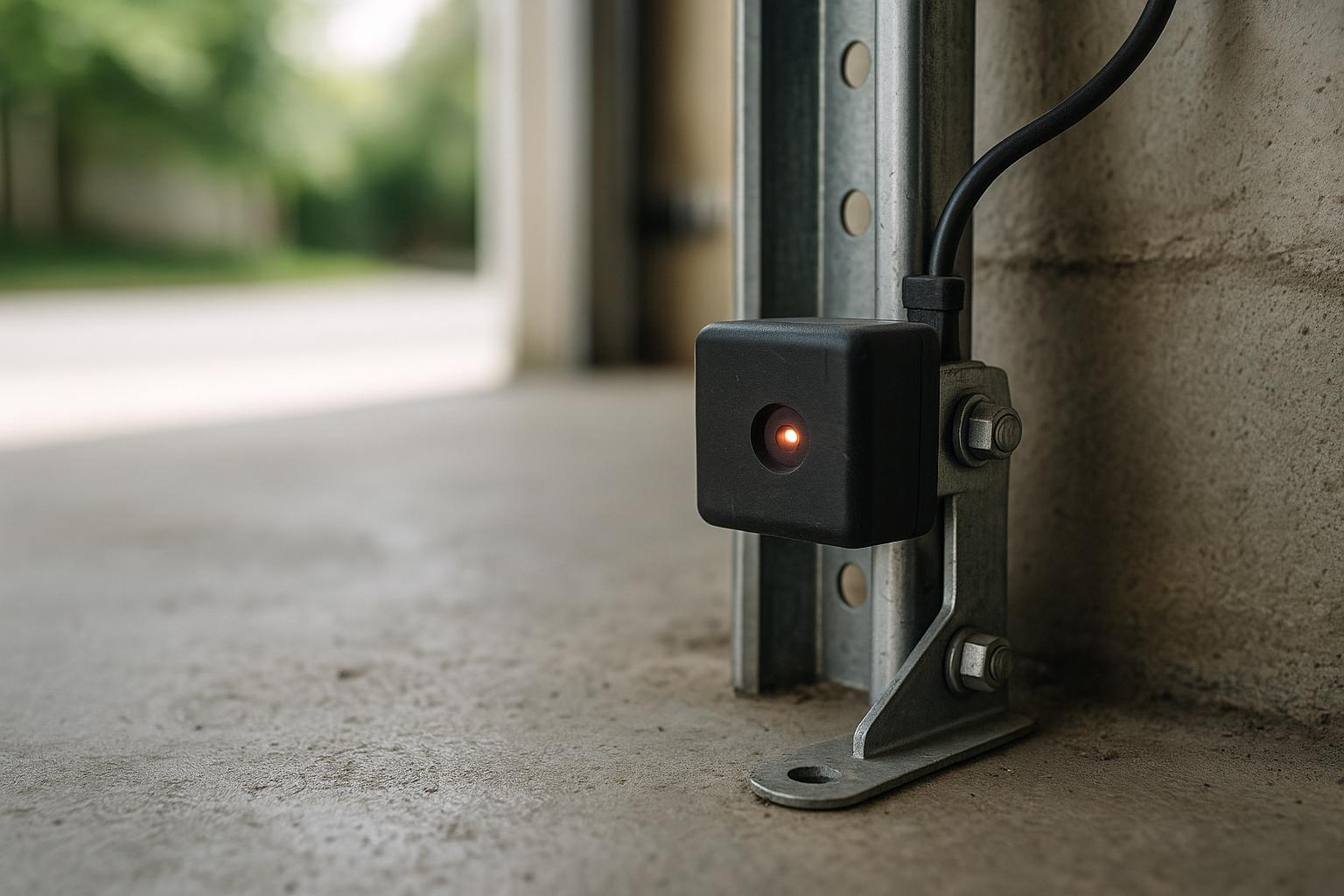
- Photo-eye sensors: Two small sensors mounted near the bottom of your garage door tracks that project an invisible beam across the opening. If anything breaks that beam, the door reverses.
- Auto-reverse mechanism: A pressure-sensitive system that reverses the door if it encounters resistance while closing.
Both of these features exist to prevent the door from closing on a person, pet, or object. They save lives — but when they malfunction, they can make your door practically unusable.
Cause #1: Misaligned Photo-Eye Sensors
This is the number one reason garage doors reverse prematurely, and it's often the easiest to fix. The photo-eye sensors on either side of your garage door opening need to be precisely aligned to maintain their infrared beam. If one sensor gets bumped — by a bike, a trash can, a lawnmower, or even just vibration over time — the beam breaks and the opener thinks something is in the way.
How to Check
Look at the small LED lights on each sensor. On most models, both lights should be steady and green (or one green and one amber, depending on the brand). If one is blinking, the sensors are likely misaligned.
What You Can Do
Gently adjust the sensor that's blinking until the light becomes steady. Make sure both sensors are pointing directly at each other. Also check for cobwebs, dirt, or moisture on the sensor lenses — a quick wipe with a soft cloth can sometimes solve the problem entirely. Living near the coast here in Port Hueneme, salt air and moisture buildup on sensors is something we see regularly.
Cause #2: Something Is Blocking the Door's Path
It sounds obvious, but it's worth mentioning because it's easy to overlook. A small object on the garage floor, a leaf blown in by the wind, or even a slight bump in your weather seal can trigger the safety sensors or the auto-reverse feature. Walk the full length of the door's path and make sure nothing is in the way, including items that might be just barely crossing the sensor beam a few inches off the ground.
Cause #3: Incorrect Close-Limit Settings
Your garage door opener has close-limit settings that tell the motor exactly how far the door should travel before it's considered fully closed. If these settings are off — set too far — the opener thinks the door has hit an obstruction when it contacts the ground, and it reverses.
What You Can Do
Most openers have adjustment screws or dials (usually labeled "down limit" or "close limit") on the motor unit. Turning the down-limit screw in small increments can fix this issue. However, if you're not comfortable making these adjustments, it's best to call a professional. Setting the limits incorrectly can create a genuine safety hazard.
Cause #4: Worn or Damaged Tracks
Your garage door travels along metal tracks on both sides. If those tracks are bent, dented, or have accumulated debris, the door can bind or encounter resistance during its travel. The opener interprets that resistance as an obstruction and triggers the auto-reverse.
Inspect the tracks visually for any obvious damage. Look for gaps between the track and the rollers, or spots where the track appears bent inward. You can clean out minor debris yourself, but bent tracks typically require professional repair or replacement to ensure the door operates safely.
Cause #5: Broken or Worn Springs
Garage door springs bear the majority of the door's weight. When a spring is weakened, stretched, or broken, the opener motor has to work much harder to move the door. This added strain can cause the opener's force settings to trigger a reversal because the system detects more resistance than expected.
Spring issues are something you should never attempt to fix yourself. Garage door springs are under extreme tension and can cause serious injury if handled improperly. If you suspect a spring problem — you might notice the door feels unusually heavy when lifted manually, or you can see a visible gap in one of the torsion springs above the door — call a qualified technician.
Cause #6: Opener Motor or Logic Board Issues
If you've checked everything above and the door still reverses, the problem may be with the opener itself. The motor could be failing, or the logic board — the electronic brain of the opener — could be malfunctioning. Electrical surges, age, and humidity can all contribute to logic board failure, especially in coastal communities where salt air accelerates wear on electronic components.
Opener issues generally require professional diagnosis. In some cases, a repair is possible; in others, replacing the opener is the more cost-effective solution, particularly if your unit is more than 10 to 15 years old.
When to Call a Professional
Some of these fixes are simple enough for a handy homeowner to tackle — cleaning sensors, clearing obstructions, or making minor limit adjustments. But several of these causes involve components that are dangerous to work with or require specialized knowledge to diagnose properly.
Here's a good rule of thumb: if the fix involves springs, cables, tracks, or electrical components, it's time to call in a pro. Attempting these repairs without the right tools and training can lead to injury or further damage to your door system.
Keeping Your Garage Door Reliable Year-Round
The best way to avoid unexpected issues like a reversing garage door is regular preventive maintenance. An annual inspection by a trained technician can catch worn springs, misaligned tracks, sensor issues, and opener problems before they leave you stuck.
At Port Hueneme Garage Door, we help homeowners and businesses across Port Hueneme, Oxnard, Ventura, and the surrounding Ventura County coast keep their garage doors operating safely and reliably. Whether your door is reversing, making strange noises, or just due for a checkup, we're here to help.
Don't ignore a garage door that won't close properly — it's a security risk, an energy waste, and a problem that usually gets worse over time. Get it diagnosed early, and the fix is almost always simpler and less expensive than you'd expect.