
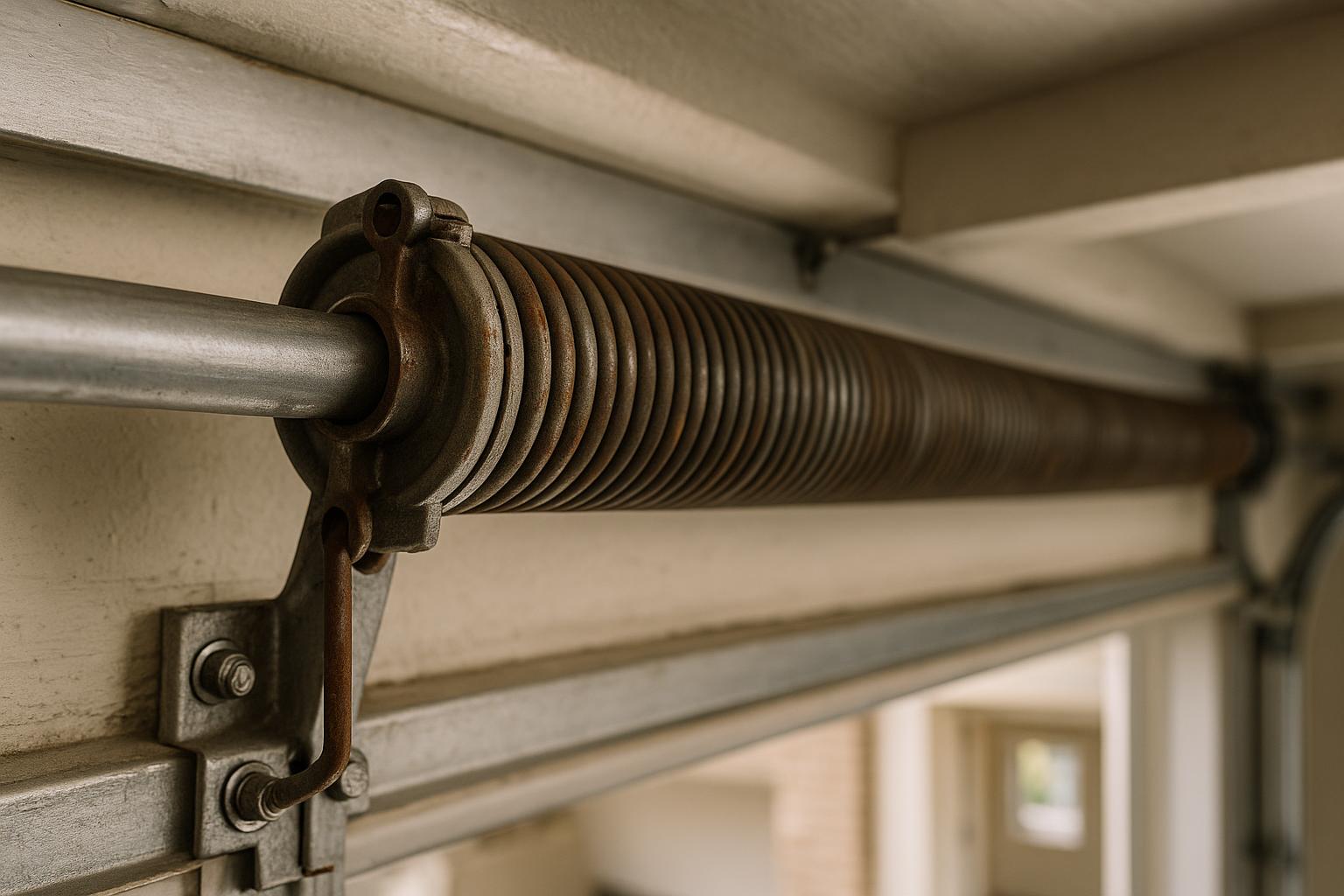
Your Garage Door Springs Are Trying to Tell You Something
If you've ever heard a garage door spring snap, you know it's not subtle. It sounds like a gunshot echoing through the house, and it leaves your garage door completely inoperable — sometimes in a dangerous position. The good news is that springs almost never fail without warning. There are clear signs that your garage door springs are nearing the end of their life, and catching them early can save you money, inconvenience, and potential injury.
Here in Port Hueneme, where the salty coastal air can accelerate wear on metal components, paying attention to your springs is especially important. Let's walk through the warning signs every homeowner should know.
How Garage Door Springs Work
Before diving into the warning signs, it helps to understand what your springs actually do. Your garage door is heavy — most residential doors weigh between 130 and 350 pounds. The springs carry almost all of that weight, making it possible for your opener (or your arms) to lift and lower the door smoothly.
There are two main types of garage door springs:
- Torsion springs — mounted on a metal shaft above the door opening. These twist to store energy and are the most common type in modern installations.
- Extension springs — mounted along the horizontal tracks on either side of the door. These stretch and contract to counterbalance the door's weight.
Both types are under extreme tension, which is why spring replacement should always be handled by a trained professional. A spring under tension can cause serious injury if mishandled.
7 Warning Signs Your Springs Are Failing
1. Your Door Feels Heavier Than Usual
Try this simple test: disconnect your garage door opener by pulling the emergency release cord, then manually lift the door about halfway. A properly balanced door should stay in place on its own. If it feels unusually heavy, slides back down, or requires significant effort to lift, your springs are losing tension and nearing failure.
2. The Door Opens Unevenly or Crooked
If one side of your garage door rises faster than the other, it often means one spring has weakened more than its counterpart. This uneven movement puts extra stress on your tracks, rollers, and opener, which can lead to additional damage if you ignore it.
3. You Hear Squealing, Grinding, or Popping Sounds
Some noise during operation is normal, but new or worsening sounds are a red flag. Squealing can indicate that the spring coils are binding. Popping or cracking sounds may mean the metal is fatiguing. If your garage door has suddenly become much louder, have your springs inspected.
4. Visible Gaps in the Spring Coils
Take a look at your torsion spring above the door. A healthy spring has tightly wound coils with uniform spacing. If you notice a visible gap or separation between coils — even a small one — the spring has likely already partially failed or is stretched beyond its functional range.
5. The Door Slams Shut Instead of Closing Smoothly
When springs lose their ability to counterbalance the door's weight, gravity takes over. If your door drops the last foot or two instead of lowering gently, that's a sign the springs can no longer control the descent. This is a safety hazard, especially in homes with children or pets.
6. Rust or Corrosion on the Springs
This is particularly relevant for homeowners in Port Hueneme and along the Ventura County coast. Salt air accelerates corrosion on metal components, and rust weakens springs significantly. Corroded springs lose flexibility and are far more likely to snap without much additional warning. If your springs look rusty or pitted, it's time to have them evaluated.
7. Your Springs Are More Than 7-10 Years Old
Most standard garage door springs are rated for approximately 10,000 cycles — one cycle being a single open-and-close sequence. For the average household that uses their garage door two to four times per day, that translates to roughly seven to ten years of service life. If your springs are in that age range and you're noticing any of the symptoms above, replacement is likely overdue.
What Happens When a Spring Breaks
When a garage door spring snaps, several things happen at once:
- The door becomes extremely heavy and difficult (or impossible) to open manually.
- Your garage door opener may struggle, overheat, or refuse to operate.
- The door may be stuck in a partially open or closed position, leaving your home or belongings exposed.
- Broken spring pieces can fly across the garage, potentially damaging your car, walls, or anything nearby.
A broken spring is never just an inconvenience — it's a situation that demands prompt professional attention.
Can You Replace Garage Door Springs Yourself?
We strongly advise against DIY spring replacement. Torsion springs in particular store an enormous amount of energy, and improper handling has caused serious injuries and even fatalities. Professional technicians have the specialized tools, training, and experience to replace springs safely and ensure the door is properly balanced afterward.
At Port Hueneme Garage Door, we replace both torsion and extension springs and always replace them in pairs — even if only one has failed. Springs installed at the same time wear at roughly the same rate, so if one breaks, the other is close behind. Replacing both saves you from a repeat service call in a few weeks or months.
How Coastal Conditions Affect Spring Life
Living near the coast in Port Hueneme has plenty of advantages, but the marine environment is tough on garage door hardware. The combination of salt air, moisture, and temperature fluctuations accelerates corrosion and metal fatigue. Homeowners in coastal areas often see spring lifespans shortened by 20 to 30 percent compared to inland communities like Thousand Oaks or Moorpark.
Regular lubrication with a silicone-based spray can help protect your springs from corrosion and extend their useful life. It's a simple step that takes five minutes and can add years to your springs' longevity.
When to Call a Professional
If you've noticed any of the warning signs listed above, don't wait for a full failure. A proactive spring replacement is faster, safer, and less expensive than an emergency repair — and it prevents the collateral damage that a snapping spring can cause to your opener, tracks, and cables.
Port Hueneme Garage Door serves homeowners and businesses throughout Port Hueneme, Oxnard, Ventura, and Camarillo with fast, reliable spring replacement and garage door repair. We carry a wide selection of springs on our trucks so most jobs can be completed in a single visit.
If your garage door is showing signs of spring trouble, give us a call. We'll inspect your system, give you an honest assessment, and get your door back to safe, smooth operation.