
Your Garage Door Shouldn't Sound Like That
You press the button, and instead of the smooth hum you're used to, your garage door lets out a grinding screech that makes the neighbors look over. Or maybe it's a rhythmic banging that shakes the walls every time the door goes up or down. Whatever the noise, one thing is clear: something isn't right.
A properly functioning garage door should operate relatively quietly. When unusual sounds start creeping in, they're almost always a sign that a component needs attention. The good news is that most noisy garage door problems are fixable — and catching them early can save you from a much bigger repair bill down the road.
Here in Port Hueneme, where many homes have attached garages that share walls with living spaces, a noisy garage door isn't just a mechanical concern — it's a quality-of-life issue. Let's break down the most common garage door noises, what causes them, and what you should do about each one.
Squealing or Screeching
A high-pitched squeal when your garage door moves is one of the most common complaints we hear from homeowners. This sound typically points to one of three issues:
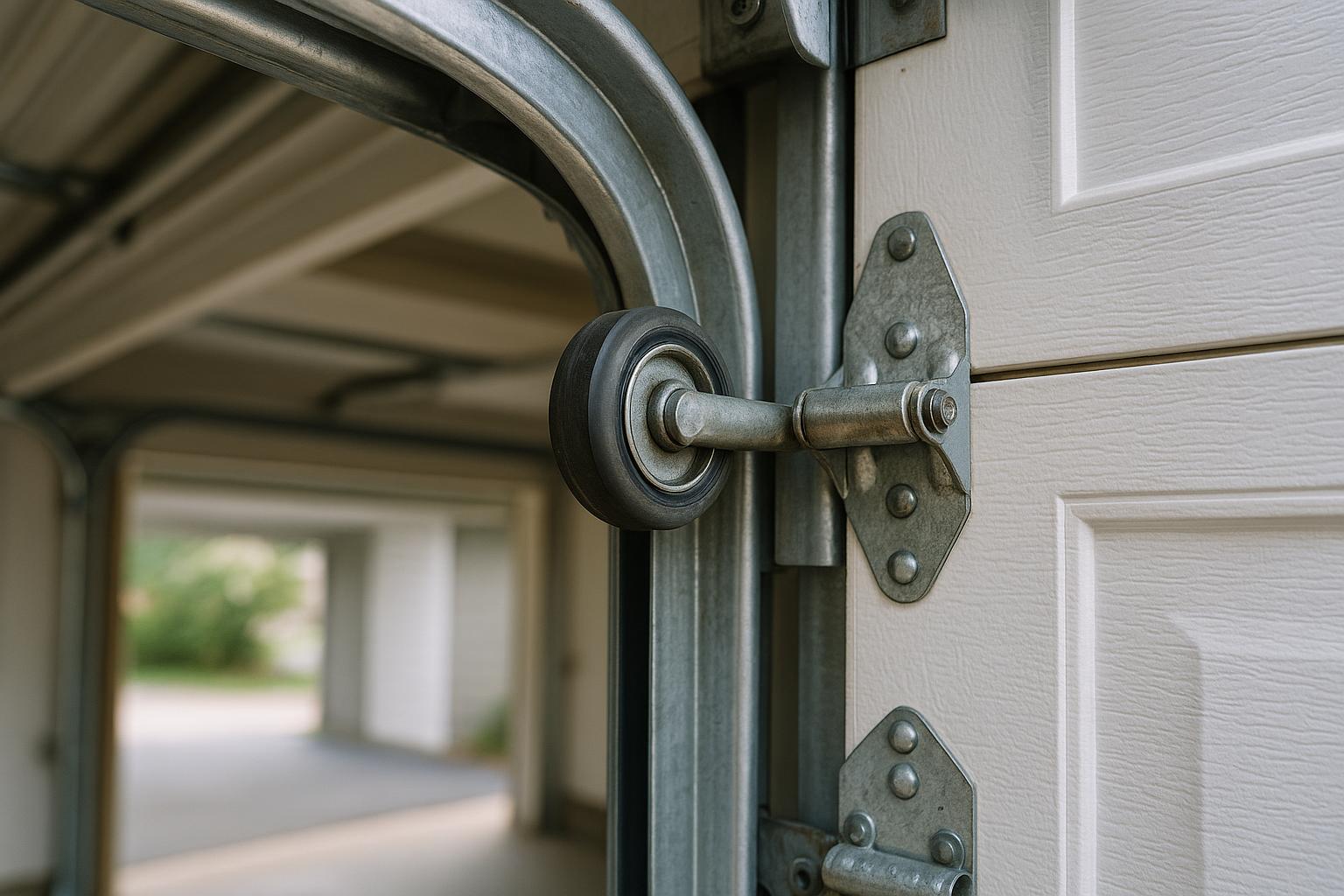
- Dry or worn rollers: Metal rollers running along metal tracks without proper lubrication will scream at you. Over time, the rollers can also wear down, developing flat spots that make the noise even worse.
- Lack of lubrication on hinges and bearings: Every pivot point on your garage door needs periodic lubrication. When hinges, bearing plates, or the torsion spring system dry out, friction creates that unmistakable screech.
- Misaligned tracks: If the vertical or horizontal tracks have shifted even slightly, the rollers can bind and drag instead of gliding smoothly, producing a squealing sound.
The fix is often straightforward. A proper lubrication with a silicone-based or lithium-based garage door lubricant can eliminate the noise immediately. If the rollers are worn, upgrading to nylon rollers is a smart move — they're dramatically quieter and don't require as much ongoing lubrication.
Grinding or Scraping
Grinding sounds are more serious than squealing and usually indicate metal-on-metal contact that shouldn't be happening. Common causes include:
- Bent tracks: A track that's been dented or bent — from a bump with a car, a fallen object, or general wear — forces the rollers to grind past the damaged section every cycle.
- Worn gear in the opener: If the grinding is coming from the ceiling-mounted opener unit rather than the door itself, the internal drive gear may be stripped or wearing out. This is especially common in older chain-drive openers.
- Torsion spring issues: A binding or improperly wound torsion spring can create a grinding sensation as the door moves, often accompanied by the door feeling heavier than usual.
Grinding noises should be addressed quickly. Continuing to operate a garage door with bent tracks or a failing opener gear can lead to the door getting stuck or the opener burning out entirely.
Banging or Popping
A loud bang or pop during operation is startling and usually means something is under stress. Here's what to look for:
- Loose hardware: Over thousands of cycles, nuts, bolts, and bracket screws can loosen. A loose hinge or track bracket can cause a popping or banging sound as the door shifts during movement.
- Torsion spring adjustment: If the springs aren't properly balanced, the door may jerk or jump at certain points during its travel, creating a banging noise.
- Panel damage or warping: Warped or damaged panels can catch or flex during operation, producing a popping sound as they move through the curved section of the track.
Start by visually inspecting the hardware. You can safely tighten loose bolts and screws yourself, but leave spring adjustments to a professional. Torsion springs are under extreme tension and can cause serious injury if handled incorrectly.
Rattling or Vibrating
A persistent rattle often comes from loose components vibrating during operation. This is one of the easier problems to diagnose and fix:
- Loose chain or belt: On chain-drive or belt-drive openers, a chain or belt that's lost its proper tension will slap and rattle as the door moves.
- Loose opener mounting: If the opener unit itself isn't securely fastened to the ceiling or its support bracket, the entire unit can vibrate and rattle during operation.
- Worn or loose hinges: Hinges that have worn out their mounting holes in the door panels will rattle with every movement.
Tightening the chain, securing the mounting hardware, or replacing worn hinges usually solves the problem. If your opener is old and the chain has stretched significantly, it may be worth considering an upgrade to a belt-drive system, which runs much more quietly.
When Noise Means It's Time for Professional Help
Some garage door noises are simple maintenance issues you can handle with a can of lubricant and a socket wrench. Others are warning signs of a component that's about to fail. Here's a general rule of thumb:
You Can Handle It
- Applying lubricant to rollers, hinges, springs, and tracks
- Tightening visible nuts and bolts on brackets and hinges
- Adjusting the chain tension on your opener (consult your owner's manual)
Call a Professional
- Anything involving torsion springs or cables
- Bent or misaligned tracks that need straightening or replacement
- Opener motor or gear problems
- Noises accompanied by the door not opening or closing properly
- Any situation where the door feels significantly heavier than normal
Attempting DIY repairs on high-tension components like springs and cables is genuinely dangerous. A professional garage door technician has the tools, training, and experience to handle these repairs safely.
Prevention Is the Best Cure
Most noisy garage door problems are preventable with regular maintenance. A basic tune-up once or twice a year — which includes lubrication, hardware tightening, balance testing, and a visual inspection of all moving parts — keeps your garage door running quietly and extends the life of every component.
For homeowners in Port Hueneme and across Ventura County, the coastal environment adds an extra layer of wear. Salt air accelerates corrosion on metal parts, which means lubrication and inspection are even more important here than in inland areas. Keeping up with maintenance isn't just about noise — it's about protecting your investment.
Don't Ignore What Your Garage Door Is Telling You
Strange noises are your garage door's way of asking for help. Ignoring them doesn't make the problem go away — it just gives it time to get worse and more expensive to fix. Whether it's a simple lubrication issue or a component that needs replacing, addressing the noise early keeps your garage door safe, functional, and quiet.
If your garage door has started making sounds that concern you, Port Hueneme Garage Door is here to help. We'll diagnose the problem, explain your options, and get your door back to running the way it should. Give us a call and let's get it taken care of.