
Your Garage Door Is the Most-Used Entry Point in Your Home
Think about how many times your garage door opens and closes each day. If you're like most families in Port Hueneme, it's at least four to six times — morning commutes, school drop-offs, evening returns, and weekend errands. That adds up to well over a thousand cycles per year, and every single one puts stress on springs, cables, rollers, and the opener.
Despite all that use, garage door maintenance is one of those things most homeowners forget about entirely. We get it. If the door goes up and comes down, everything seems fine. But by the time you hear grinding noises, notice the door shaking on its tracks, or wake up to a spring that's snapped overnight, you're dealing with a repair bill that could have been avoided.
So how often should you actually service your garage door? Let's break it down.
The Short Answer: At Least Once a Year
At minimum, your garage door should receive a professional inspection and tune-up once per year. This is the industry standard recommended by garage door manufacturers and the International Door Association. An annual service visit catches small problems before they become expensive emergencies.
However, if your garage door gets heavier-than-average use — for example, if you have multiple drivers in the household, use your garage as a workshop, or operate a home business — you should consider scheduling service every six months.
What's Included in a Professional Garage Door Tune-Up?
A proper maintenance visit isn't just a quick look and a squirt of lubricant. Here's what a thorough garage door service should cover:
Visual Inspection
A technician will examine every component of your garage door system, including the panels, hinges, brackets, springs, cables, rollers, tracks, and weatherstripping. They're looking for signs of wear, rust, fraying, misalignment, or damage.
Spring Assessment
Your garage door springs bear the full weight of the door and are under tremendous tension. A technician will check the springs for signs of fatigue, corrosion, or elongation. Torsion springs typically last 10,000 to 15,000 cycles, and catching a weakening spring early can prevent a dangerous failure.
Lubrication
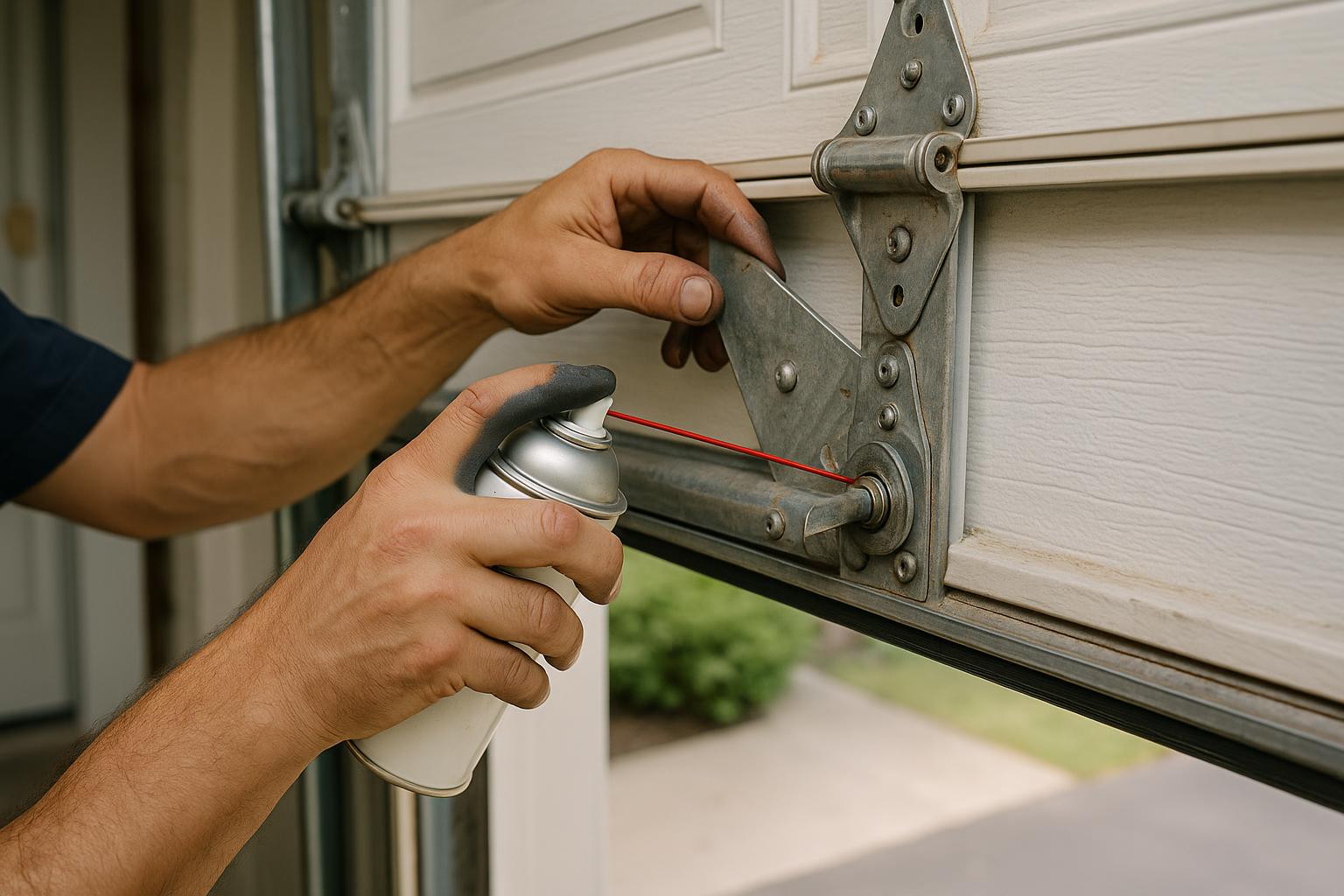
All moving parts — including rollers, hinges, spring coils, and the opener chain or screw — need proper lubrication. This reduces friction, minimizes noise, and extends the life of each component. The right lubricant matters too; a technician will use garage-door-specific products rather than general-purpose sprays like WD-40.
Track Alignment and Cleaning
Even a slight misalignment in the tracks can cause the door to bind, scrape, or operate unevenly. The technician will check that the tracks are plumb and level, clear any debris, and make adjustments as needed.
Cable Inspection
The lift cables work alongside the springs to raise and lower the door safely. Frayed or worn cables are a serious safety hazard. During a tune-up, cables are inspected closely and replaced if they show any signs of deterioration.
Opener Testing
Your garage door opener's safety features — including the auto-reverse mechanism and photoelectric sensors — are tested to make sure they're functioning correctly. This is especially important for families with children or pets.
Hardware Tightening
The constant vibration of daily operation loosens bolts, nuts, and brackets over time. A technician will go through and tighten all hardware to keep everything secure.
Balance Test
A balanced garage door should stay in place when opened halfway and released from the opener. If it slides up or drops down, the springs need adjustment. An unbalanced door forces the opener to work harder, shortening its lifespan significantly.
What You Can Do Between Professional Visits
You don't need to be a technician to keep an eye on your garage door between annual service appointments. Here are a few simple things Port Hueneme homeowners can do on their own:
- Listen for unusual sounds. Grinding, squealing, popping, or scraping noises are early warning signs that something needs attention.
- Watch the door operate. It should move smoothly and evenly. If it jerks, hesitates, or seems slower than usual, something may be off.
- Check the weatherstripping. The rubber seal along the bottom of the door keeps out moisture, dust, and pests. Living near the coast means salt air and humidity can degrade weatherstripping faster than in inland areas like Thousand Oaks or Moorpark.
- Keep the tracks clear. Wipe down the inside of the tracks occasionally to remove dirt and debris. Don't lubricate the tracks themselves — that can actually cause the rollers to slip.
- Test the auto-reverse. Place a roll of paper towels on the ground where the door closes. If the door doesn't reverse when it contacts the roll, your safety system needs adjustment immediately.
Why Coastal Living Makes Maintenance Even More Important
Port Hueneme's coastal location is one of the best things about living here, but the ocean air isn't always kind to garage doors. Salt-laden moisture accelerates rust and corrosion on metal components like springs, hinges, and tracks. Homes within a few miles of the beach — which includes most of Port Hueneme and parts of Oxnard and Ventura — tend to see faster wear on these parts compared to homes further inland like those in Camarillo.
If you live close to the coast, annual maintenance isn't optional — it's essential. A technician familiar with local conditions will know to pay extra attention to corrosion-prone areas and can recommend protective treatments or upgraded hardware that holds up better in the marine environment.
The Cost of Maintenance vs. the Cost of Neglect
A professional garage door tune-up typically costs a fraction of what you'd pay for an emergency repair. Consider the math:
- A broken torsion spring replacement can cost several hundred dollars, including the service call.
- A burned-out opener motor — often caused by an unbalanced door — means replacing the entire unit.
- A door that jumps the tracks can damage panels, requiring partial or full door replacement.
Regular maintenance helps you avoid all of these scenarios. It also keeps your warranty intact, since many manufacturers require proof of annual service to honor their coverage.
When to Call a Professional Sooner Than Your Next Scheduled Visit
Don't wait for your annual appointment if you notice any of the following:
- The door won't open or close completely
- You hear a loud bang from the garage (likely a broken spring)
- The door is visibly crooked or sagging on one side
- The opener runs but the door doesn't move
- You see frayed cables or broken hardware
These issues require prompt professional attention. Attempting to fix springs or cables yourself is extremely dangerous due to the high tension involved.
Keep Your Garage Door Running Strong
Your garage door is one of the largest moving parts of your home and one of the most important for daily convenience and security. A little preventive care goes a long way toward keeping it reliable, safe, and quiet for years to come.
If it's been more than a year since your last garage door service — or if you can't remember the last time it was serviced at all — now is a great time to schedule a tune-up. At Port Hueneme Garage Door, we provide thorough maintenance visits for homeowners across Port Hueneme, Oxnard, Ventura, Camarillo, and the surrounding Ventura County area. We'll make sure every component is in top shape so your door keeps working the way it should.